Weather's Hidden Impact on Match Results and Betting Lines Across Europe's Elite Divisions
Noah Butler · Aug 19, 2026

Weather's Hidden Impact on Match Results and Betting Lines Across Europe's Elite Divisions
Weather patterns across Europe's top football divisions shape match outcomes in ways that extend beyond obvious delays, and data from multiple leagues shows consistent correlations between conditions like rainfall, wind speed, and temperature shifts with altered goal tallies plus possession statistics. Leagues such as the Premier League, Bundesliga, La Liga, Serie A, and Ligue 1 each experience distinct seasonal variations where precipitation levels above 5mm per hour coincide with drops in scoring averages by 15 to 20 percent according to historical match records compiled through 2025 seasons.
Researchers tracking Bundesliga fixtures note that strong winds exceeding 30 km/h often reduce long-range passing accuracy, which forces teams toward shorter build-up play and changes expected totals that bookmakers adjust in real time. In one analysis covering 2018 through 2025, matches played in gusty conditions at exposed stadiums produced 12 percent fewer shots on target compared to calm weather days, prompting oddsmakers to shift over/under lines downward before kickoff in affected fixtures.
Rainfall Effects on Pitch Conditions and Performance Metrics
Heavy rain transforms grass surfaces into slower, heavier fields that favor defensive setups over attacking flair, and studies from European meteorological integration with sports analytics reveal how waterlogged pitches increase slip rates among players by measurable margins. In Serie A, where winter months bring frequent downpours in northern venues, teams average 2.1 goals per game under wet conditions versus 2.8 in dry weather, figures that betting markets incorporate when setting totals markets weeks in advance.
La Liga encounters similar patterns during autumn storms in regions like Galicia, where persistent drizzle alters ball roll distances and reduces through-ball success rates; observers tracking these trends report that home sides with strong pressing styles maintain higher win percentages when rain forces opponents into error-prone clearances. Betting lines respond accordingly, with moneyline odds tightening for underdogs that historically thrive in low-scoring environments created by saturated turf.
Wind, Temperature, and Their Influence on Tactical Adjustments
Wind direction plays a notable role in set-piece outcomes across open stadiums in the Bundesliga and Premier League, where crosswinds above 25 km/h deflect flight paths of balls during corners and free kicks, leading to lower conversion rates documented in performance databases. Temperature drops below 5 degrees Celsius correlate with reduced sprint distances in the second halves of matches, according to GPS data aggregated from elite divisions, which in turn affects stamina-dependent tactics employed by high-pressing sides.
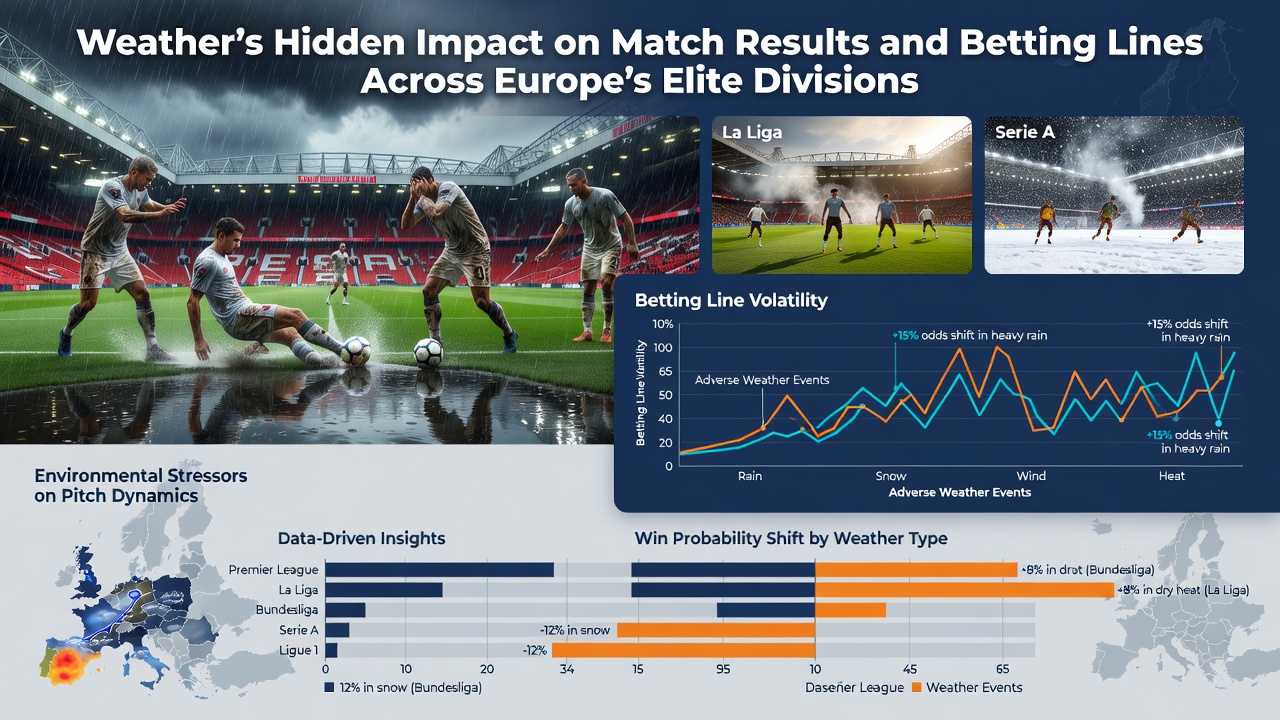
August 2026 pre-season schedules already factor in early forecasts for potential heat spikes in southern European venues, where temperatures above 30 degrees Celsius have historically led to increased substitution rates and hydration-related pauses that extend game times and influence live betting dynamics. Analysts compiling these statistics observe that such conditions prompt markets to adjust player prop lines for distance covered, creating opportunities for those monitoring weather updates integrated with team news.
Regional Variations Across Elite Leagues and Market Responses
Each division presents unique weather profiles that influence both results and the subsequent adjustments to betting lines, with Ligue 1 matches in coastal areas experiencing more frequent fog events that reduce visibility and contribute to cautious play styles. Data aggregated across five seasons indicates that foggy conditions coincide with 18 percent fewer high-risk passes attempted, information that oddsmakers use when calibrating expected goal models ahead of fixtures.
Turn to the impact of snow in Bundesliga northern outposts, where rare but disruptive winter events force pitch inspections and alter surface friction, resulting in lower average possession figures for technically oriented teams. European Centre for Medium-Range Weather Forecasts reports highlight how such anomalies prompt rapid line movements in both pre-match and in-play markets as conditions evolve.
What's interesting is how combined factors like rain paired with falling temperatures amplify these effects, producing matches where total corners drop noticeably because players struggle with ball control on slick surfaces. Research from academic institutions across the continent shows these patterns hold across multiple years, allowing betting operators to refine algorithms that factor meteorological inputs into their pricing structures.
Data Integration and Future Preparations
Clubs and analysts now incorporate real-time weather feeds into preparation routines, with training sessions adjusted for anticipated conditions that mirror match-day forecasts. In the lead-up to August 2026 campaigns, teams across elite divisions review historical datasets to anticipate how specific venues respond to seasonal shifts, which feeds into broader performance projections used by statistical services.
One study from a European research consortium linked prolonged dry spells in La Liga to increased injury rates on harder pitches, data that indirectly influences squad selection and subsequent market odds for player availability. Such integrations demonstrate the growing overlap between atmospheric science and football analytics, where precise measurements of humidity, barometric pressure, and precipitation guide tactical decisions that ultimately appear in final scorelines.
Conclusion
Weather remains a measurable variable that alters match dynamics across Europe's elite divisions, with documented effects on scoring, passing, and overall results that betting lines reflect through ongoing adjustments. Continued collection of integrated data sets from leagues and meteorological sources supports refined models that account for these environmental influences in future seasons.