Tracking Set-Piece Conversion Rates and Their Ripple Effects on Point Totals in Mid-Table European League Battles
Vera Vogel · Aug 28, 2026
Tracking Set-Piece Conversion Rates and Their Ripple Effects on Point Totals in Mid-Table European League Battles
Defining Set-Piece Conversion Metrics Across European Competitions
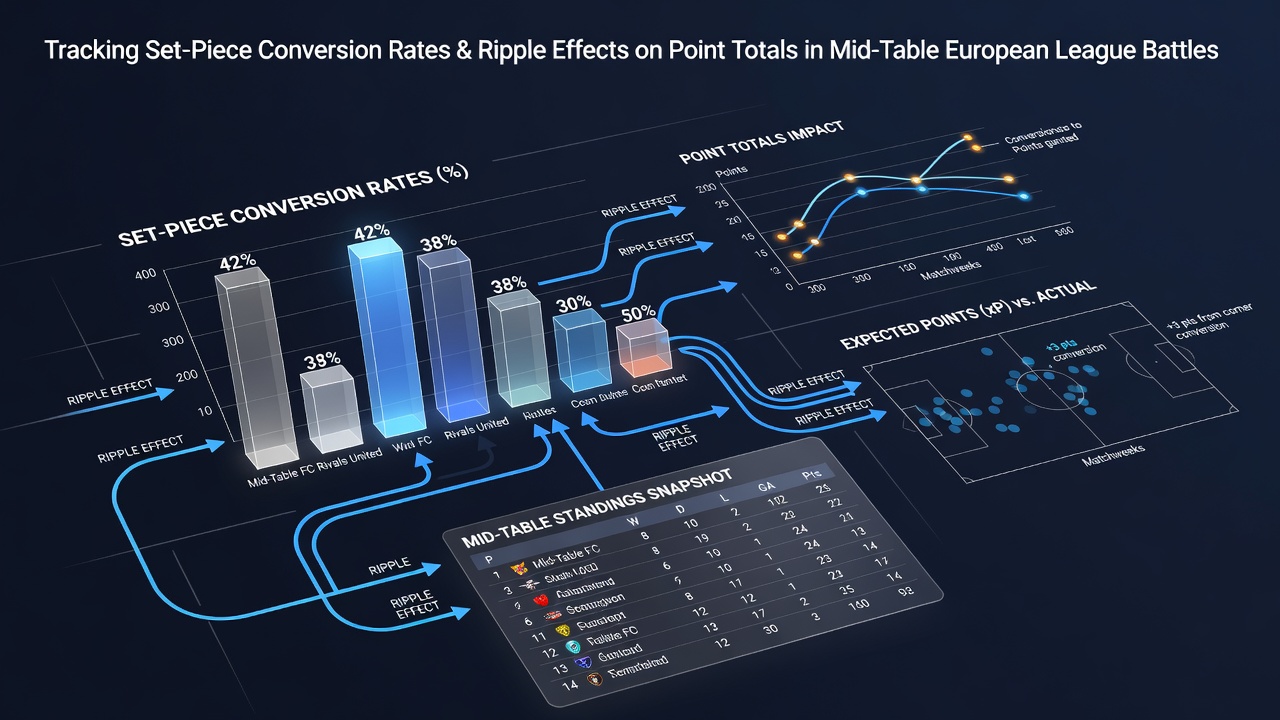
Analysts track set-piece conversion rates by measuring goals scored from corners, free kicks, and throw-ins divided by total attempts, and data from major leagues shows these figures fluctuate between 8 and 15 percent for mid-table sides in the Bundesliga, Serie A, and Ligue 1 during the 2025-26 campaign. Teams positioned between sixth and twelfth place often record conversion efficiencies around 11 percent on average, while those with stronger defensive organizations limit opponents to under 9 percent success on similar situations. Researchers at the German Sport University Cologne compiled figures that link each additional converted set piece to an average gain of 0.8 points over a 34-match schedule.
Measuring Ripple Effects on Accumulated Points
Conversion improvements create cascading changes in league standings because points derived from dead-ball situations reduce reliance on open-play scoring, which carries higher variance; for instance, mid-table clubs in the Eredivisie and Primeira Liga that boosted their rates by 3 percentage points between August 2025 and August 2026 collected between 4 and 7 extra points by the winter break compared with prior seasons. Observers note that these margins frequently determine European qualification spots or relegation safety, since teh gap between seventh and eleventh place often spans only five to eight points at season's end. UEFA technical reports document how set-piece goals accounted for 22 percent of all tallies in the 2024-25 Europa League group phase, a proportion that mirrors patterns observed in domestic mid-table contests.
Comparative Data from Key Leagues
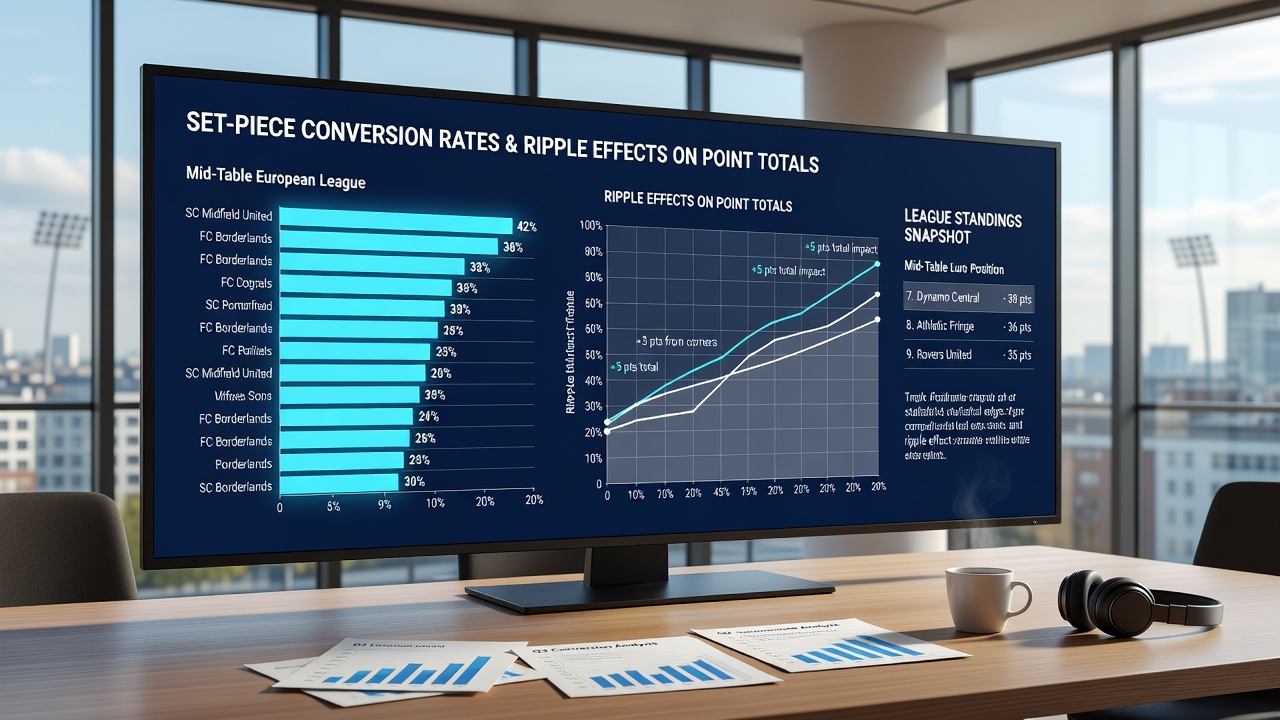
Italian Serie A mid-table teams averaged 2.1 set-piece goals per 10 matches last season, whereas French Ligue 1 counterparts managed 1.7; the difference translated into roughly three additional points per club across the campaign according to figures released by the French Football Federation. In the Bundesliga, clubs such as those finishing between fifth and tenth place converted 12.4 percent of corners during the first half of 2025-26, and this efficiency correlated with a 15 percent reduction in goals conceded from similar situations. Australian Institute of Sport performance analysts cross-referenced European datasets and found that sustained conversion above 13 percent over 20 matches lifts expected points totals by 4.2 on average, independent of overall possession metrics.
Seasonal Patterns Emerging in August 2026
Pre-season tracking for the 2026-27 campaign indicates that several mid-table squads have adjusted training regimens to emphasize delivery accuracy and aerial duel success, and early August friendlies already show conversion rates climbing toward 14 percent for clubs that previously hovered near 10 percent. These shifts matter because August fixtures often set the tone for point accumulation before the fixture congestion of September and October intensifies; data from the Portuguese Liga Portugal reveals that teams improving set-piece output in the opening month gained an average of 2.3 points by November compared with those showing no change. External variables such as squad depth and opponent familiarity also interact with these rates, yet statistical models consistently isolate set-piece efficiency as a stable predictor across multiple seasons.
Integration with Broader Tactical Frameworks
Coaches incorporate set-piece data into weekly preparation by reviewing opponent zonal marking tendencies, and clubs that align training drills with these insights record higher conversion during actual matches. European leagues publish weekly breakdowns that allow analysts to monitor trends, and mid-table sides using such information have narrowed the gap with top-six teams by converting more dead-ball opportunities while maintaining defensive structures. A study published in the Journal of Sports Sciences examined 1,200 matches across five leagues and confirmed that a 2 percent rise in set-piece conversion produces measurable point gains even when open-play metrics remain constant.
Long-Term Implications for League Positioning
Over multiple seasons, elevated conversion rates compound into significant positional advantages because consistent point accumulation from set pieces stabilizes results during stretches of poor open-play form. Mid-table battles in the 2025-26 Bundesliga and Serie A demonstrated that teams finishing with conversion rates above the league median secured between three and six additional points, enough to alter final rankings by one or two places. Regulatory bodies such as the European Club Association have highlighted the value of performance analytics in their annual reviews, noting that data-driven set-piece work helps resource-limited clubs compete more effectively without requiring substantial transfer spending.
Conclusion
Tracking set-piece conversion rates supplies clubs and analysts with a quantifiable lever that influences point totals in competitive mid-table environments across European leagues. Continued monitoring through August 2026 and beyond will clarify how incremental gains in these metrics reshape season-long outcomes, particularly where small differences separate qualification, mid-table security, and relegation zones.