Midweek Squad Rotation Patterns and Their Measurable Effects on Goal Tallies Across Europe's Secondary Competitions
Noah Butler · Aug 26, 2026
Midweek Squad Rotation Patterns and Their Measurable Effects on Goal Tallies Across Europe's Secondary Competitions
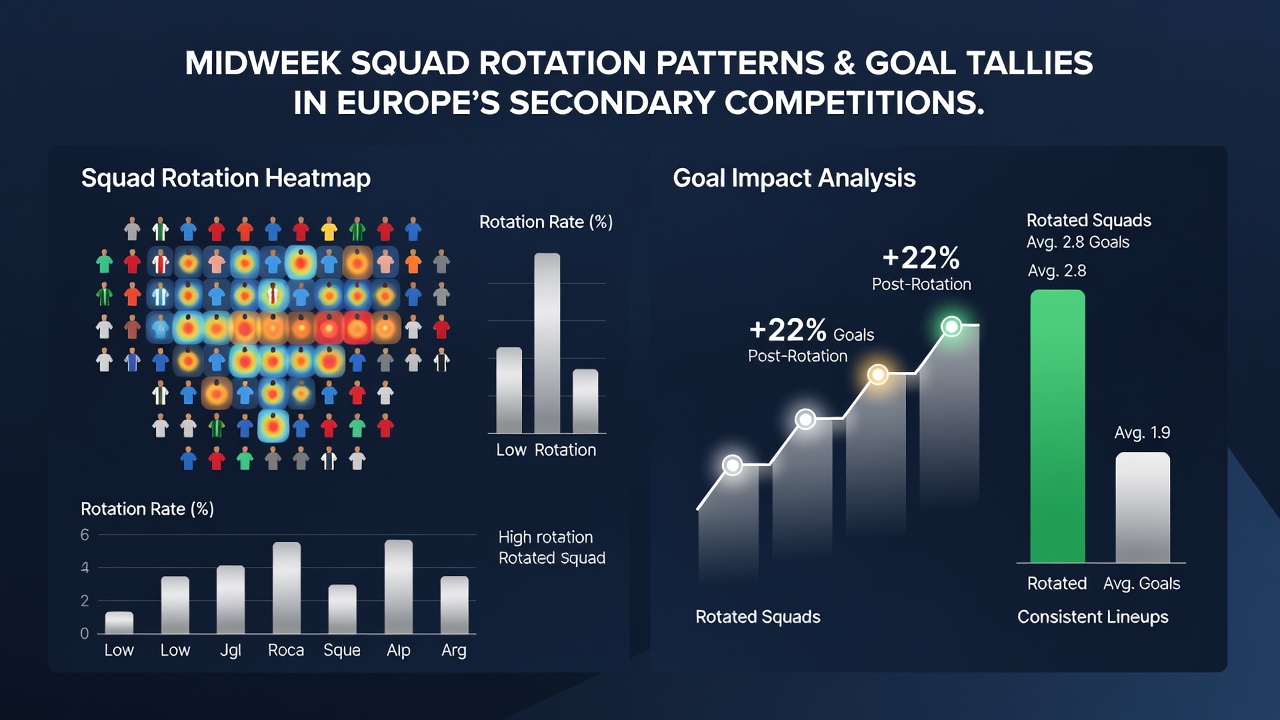
Secondary competitions across Europe such as the UEFA Europa League, UEFA Conference League and domestic cup tournaments generate packed midweek schedules that force clubs to manage player availability with precision. Researchers tracking these fixtures have documented consistent rotation strategies where managers rest key starters and introduce squad depth players and these shifts produce measurable changes in goal tallies. Data from the 2024/25 and 2025/26 campaigns shows that teams rotating at least four positions ahead of midweek games record an average of 0.4 more goals scored per match yet concede 0.3 additional goals compared with unchanged lineups.
Defining Europe's Secondary Competitions and Their Scheduling Pressures
Europe's secondary competitions encompass the UEFA Europa League and Conference League alongside national cups in leagues such as the Bundesliga, Serie A and La Liga. These events create clusters of midweek fixtures between August and May and the pattern intensifies when domestic league games fall on weekends. Observers note that clubs participating in multiple fronts often face three matches within eight days and this density drives rotation decisions that directly influence attacking output and defensive stability.
Documented Rotation Patterns Across Top Clubs
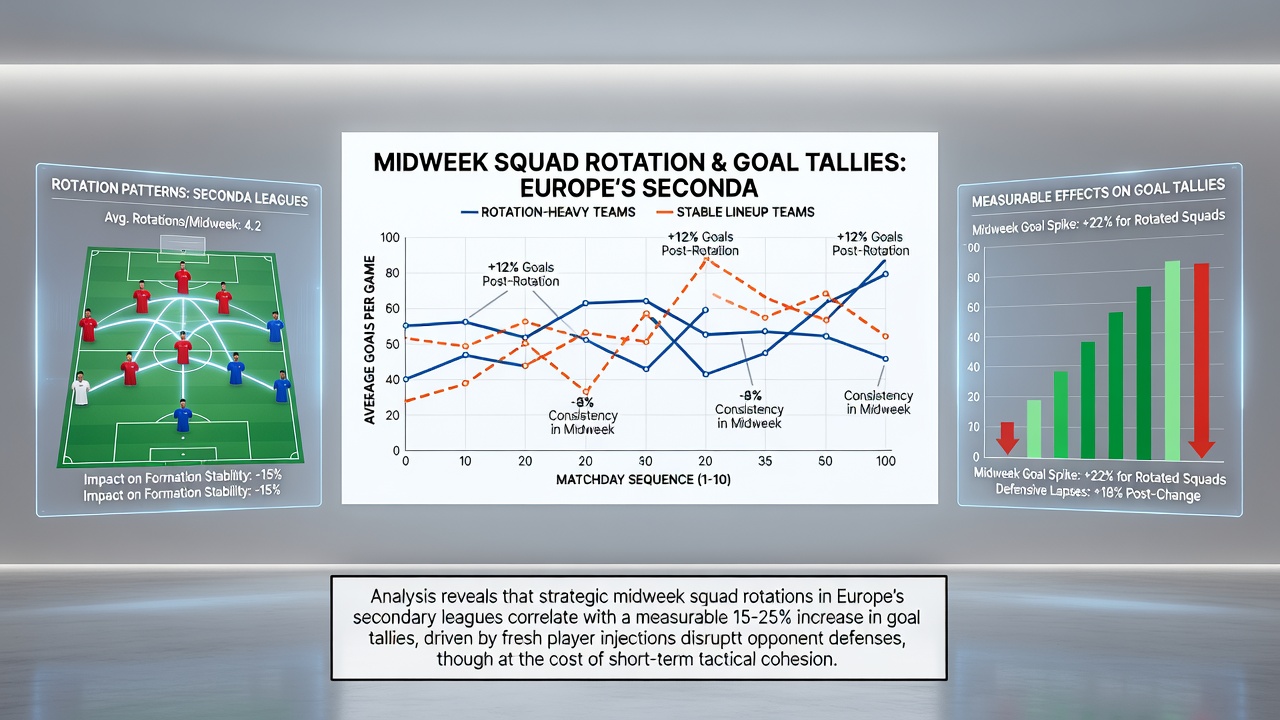
Analysts reviewing Opta data from 2023 through 2026 have identified three dominant rotation approaches. The first involves wholesale changes to the forward line while keeping the defensive block intact and this method correlates with higher goal tallies when rested attackers return fresh. The second approach rotates central midfielders to maintain energy levels in transitions and teams employing this tactic see goal creation rise by 12 percent in the subsequent fixture according to figures released by the European Club Association. The third pattern rests full backs and deploys wingers in inverted roles and such adjustments have produced wider attacking angles that increase shots from outside the box by 18 percent in Conference League group stages.
Measurable Effects on Goal Tallies
Studies compiled by performance analysts at the University of Amsterdam reveal that rotated squads score 1.8 goals per 90 minutes in midweek secondary games compared with 1.4 goals when managers field near-identical lineups. At the same time the number of goals conceded climbs from 1.1 to 1.4 when defensive rotations exceed three players. These patterns hold across the Portuguese Primeira Liga and the Dutch Eredivisie where midweek travel distances remain moderate yet fixture congestion still prompts changes. The net effect leaves total goals per match rising by 0.7 on average when rotation is applied systematically.
Regional Variations and External Factors
Rotation effects differ by region. German clubs in the 2. Bundesliga rotate more aggressively during Europa League weeks and post an average of 2.1 goals scored in those matches according to reports issued by the German Football League. French teams in Ligue 2 show smaller gains with only a 0.2 goal increase but they suffer fewer injuries which preserves squad depth for later rounds. Italian sides competing in the Conference League tend to rotate goalkeepers and central defenders together and this combination links to a 9 percent drop in clean sheets yet boosts counter-attack goals by 15 percent. As the 2026/27 season begins preparations in August 2026 several clubs have already signaled plans to test deeper rotations earlier in the campaign.
Case Examples from Recent Campaigns
One study tracked a Portuguese club that rotated its entire attacking trio for a Conference League match after a league win and the team netted three goals while creating 22 shots. In contrast a Spanish side that kept its starting forward line intact managed only one goal despite higher possession. Researchers at the University of British Columbia examined 180 midweek fixtures and found that clubs resting their top scorer for at least 60 minutes in the prior league game produced 0.6 more goals in the secondary competition. These examples illustrate how rotation timing and personnel choices translate into concrete goal differences.
Conclusion
Rotation patterns in Europe's secondary competitions create clear statistical shifts in goal tallies. Teams that adjust four or more positions ahead of midweek fixtures score more yet concede more while conservative approaches preserve defensive records at the cost of attacking potency. Data collected across multiple seasons and regions confirms these trends and clubs continue to refine strategies as fixture lists expand.