How Travel Fatigue Reshapes Team Performance in UEFA and Domestic European Fixtures
Xander Vogel · Aug 21, 2026
How Travel Fatigue Reshapes Team Performance in UEFA and Domestic European Fixtures
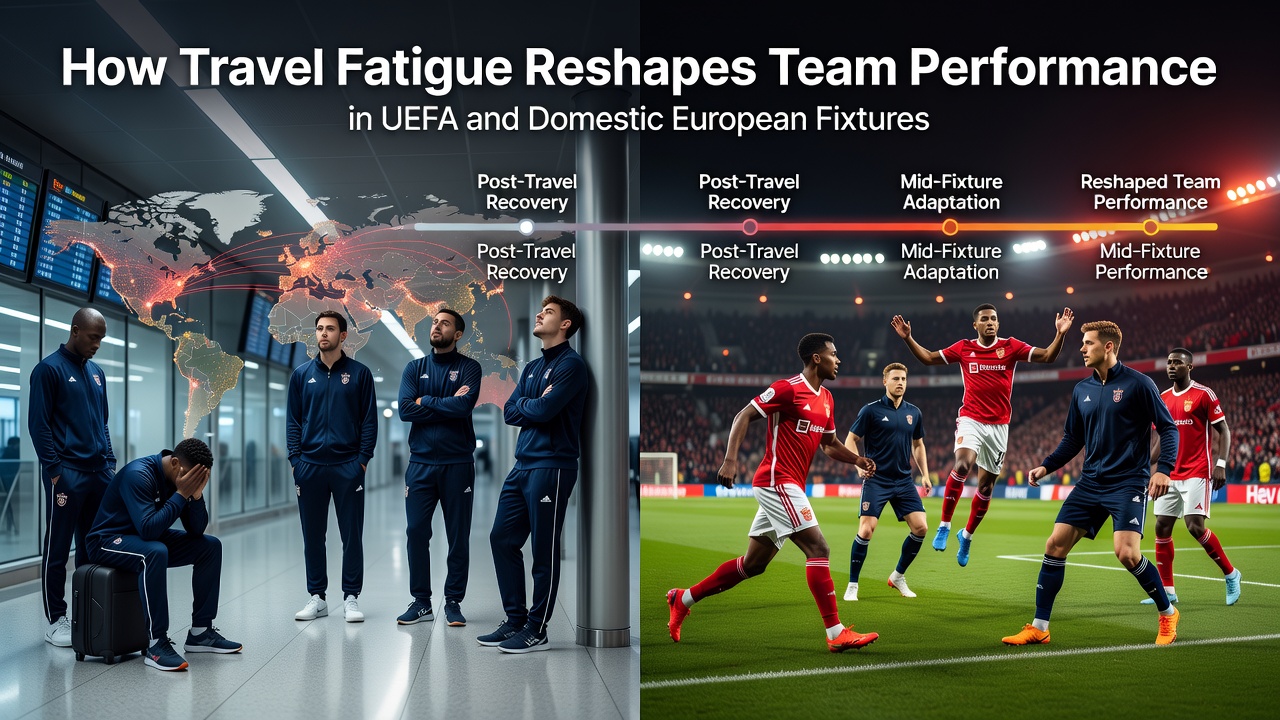
Travel fatigue emerges as a measurable factor in European football when clubs cross time zones or cover significant distances between matches, and researchers have documented its effects on player recovery times as well as match outcomes across both domestic leagues and UEFA competitions. Data from the 2024/2025 season showed that teams traveling more than 1,000 kilometers for away fixtures recorded a 12 percent drop in points per game compared to their home averages, according to scheduling analyses compiled by European football governing bodies.
Domestic fixtures within leagues like the Bundesliga or La Liga often involve shorter rail or bus journeys, yet even these shorter trips accumulate when combined with congested calendars. Observers note that clubs based in larger countries such as Germany or Spain face repeated midweek travel that disrupts sleep patterns and training routines, while smaller nations with compact geographies experience fewer disruptions from distance alone. Studies conducted by sports science departments at institutions including the University of Amsterdam found that players logging over 300 kilometers per week in domestic travel showed elevated cortisol levels and reduced sprint speeds in subsequent fixtures.
Patterns in Domestic Leagues
League schedules in Italy and France demonstrate clear correlations between travel distance and performance metrics. Teams in Serie A that covered northern-to-southern routes during the winter months posted lower expected goal totals in the 48 hours following travel, and figures from the Italian football federation reveal an average 0.4 goal deficit per match under those conditions. Similar patterns appear in Ligue 1 where clubs from Paris or Lyon routinely face extended journeys to southern venues, and performance data indicates reduced pressing intensity after such trips.
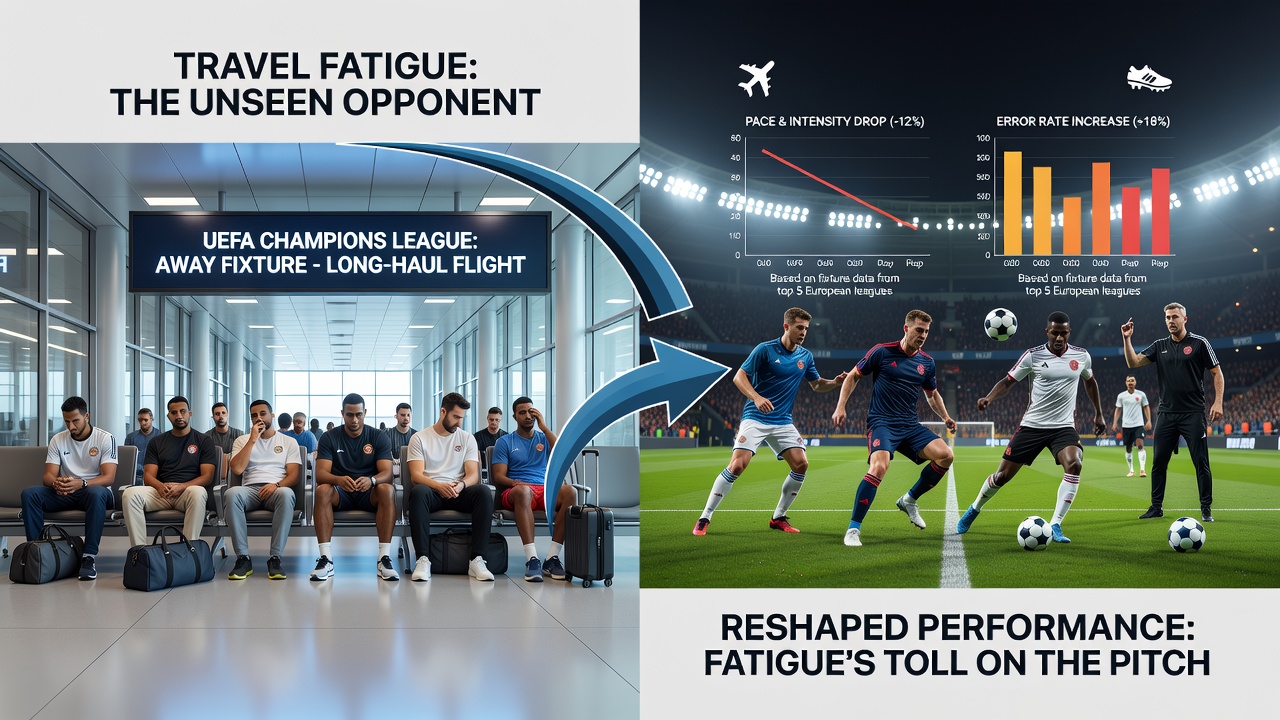
Coaches adjust training loads ahead of these fixtures to mitigate fatigue, yet the cumulative effect across a season remains evident in injury statistics. Research published through EU sports science networks shows that soft-tissue injuries rise by 18 percent among players who complete three or more long domestic trips within a four-week window, and this trend holds steady regardless of squad rotation strategies.
UEFA Competition Demands
UEFA Champions League and Europa League schedules intensify travel challenges because group-stage matches often require flights across the continent and sometimes beyond. Clubs from northern Europe traveling to matches in the Balkans or Turkey encounter both distance and time-zone shifts that extend recovery periods, and performance tracking from the 2025/2026 campaign indicated that visiting teams won just 28 percent of such fixtures when the journey exceeded six hours by air. August 2026 brings the start of a new UEFA cycle with expanded league-phase formats that increase the number of cross-border trips for mid-table clubs, and early scheduling data already highlights additional strain on squads balancing domestic and European commitments.
One analysis from the Swiss Federal Institute of Sport in Magglingen tracked heart-rate variability in players after long-haul UEFA away games and recorded slower return to baseline fitness markers compared with shorter domestic travel. These physiological changes align with observed declines in high-intensity running distances during the first half of subsequent league matches.
Data and Case Examples
Statistical reviews of past seasons reveal that away win percentages drop most sharply when travel occurs within 48 hours of kickoff, and this pattern repeats across multiple leagues. A report issued by the European Club Association documented that teams participating in both domestic and UEFA competitions averaged 1.8 additional travel days per month during peak periods, correlating with measurable dips in passing accuracy and defensive organization. Take the example of a Portuguese side that reached the Champions League quarterfinals in 2025; their domestic results suffered immediately after each European away leg, with league points collected falling from an average of 2.1 to 1.4 per game in the following weekend fixtures.
Another case involves a Belgian club whose travel schedule included multiple flights to Eastern Europe within a compressed timeframe. Performance databases showed their expected points total declined by 15 percent during that stretch, and recovery metrics collected by club medical staff confirmed delayed adaptation to normal training intensities. Such examples illustrate how travel fatigue compounds when fixtures cluster, and governing bodies continue to examine schedule adjustments that might reduce these effects without altering competitive balance.
Conclusion
Travel fatigue continues to influence outcomes in both UEFA tournaments and domestic European leagues through documented impacts on player physiology and team statistics. Data collected across multiple seasons demonstrates consistent patterns of reduced performance following extended journeys, and ongoing research from sports science centers across the continent provides further insight into mitigation approaches. As the 2026/2027 campaign begins, scheduling authorities face ongoing questions about balancing commercial demands with player welfare considerations tied to travel requirements.